
Most “Top 50 Pharma Companies in India” lists on the internet are just numbered rankings copied off each other. Each new generation drifts a little further from the primary financial data. We’ve taken a different route here. Every company on this list has been checked against the latest reported annual revenue, which is FY 2024-25. For publicly listed names, we’ve also pulled in the January 2026 market capitalisation. For each entry we’ve noted the headquarters, the therapy mix, and the question almost nobody bothers to answer in these roundups: does the company actually take third party manufacturing orders from outside brand owners, and at what scale? If you’re reading a top-50 list to figure out who to approach for your own brand or PCD franchise, that third-party-access question is what decides it.
Within each tier, the ranking below uses FY 2024-25 group revenue as the primary sort. Market capitalisation sits behind that as a secondary reference for listed companies. Revenue numbers are in Indian rupees, crore. Listed company market caps reference January 2026 trading. The primary sources cited include company annual reports. We also drew on the BSE and NSE listing data, plus the GlobalData India Healthcare Companies by Market Cap tracker. For regulatory context the Central Drugs Standard Control Organisation (CDSCO) was the reference point. Two things shape the operating environment for every company on this list. One is the Revised Schedule M binding from 1 January 2026 per the CDSCO 10 November 2025 directive. The other is the NPPA DPCO 2025 ceiling price framework.
Tier 1: Top 10 by FY25 revenue and January 2026 market cap
These are the multinational-scale Indian pharma players. Their production runs almost entirely for their own brands and regulated-market exports. Some will take very large B2B contracts. None will entertain a small brand owner walking in with a Rs. 5 lakh order.

1. Sun Pharmaceutical Industries
India’s largest pharma company by both revenue and market cap. Founded 1983 in Vapi by Dilip Shanghvi, headquartered Mumbai. FY 2024-25 group revenue came in at approximately Rs. 54,729 crore. The January 2026 market cap sits between roughly Rs. 4.15 and Rs. 4.34 trillion. That makes it the most valuable Indian pharma stock by a wide margin. The portfolio is strong across generics, specialty drugs (Ilumya, Cequa, Winlevi via Sun Dermatology), and branded formulations, with serious traction in both the domestic and US markets. Multiple Gujarat plants including Halol, plus other manufacturing units. Sun Pharma corporate site.
Third party for small buyers? No.
2. Dr. Reddy’s Laboratories
Founded 1984 in Hyderabad by Anji Reddy. FY 2024-25 group revenue was approximately Rs. 28,409 crore, with FY 2024-25 net sales of approximately Rs. 16,962 crore. January 2026 market cap is around Rs. 1.01 trillion. Generics specialist. Deep US and emerging-markets presence. The API business is one of the stronger ones in the country. Dr. Reddy’s corporate site.
Third party for small buyers? No.
3. Cipla
The oldest name on this tier. Founded 1935 in Bombay by K.A. Hamied. FY 2024-25 revenue came in at approximately Rs. 27,547 crore with net sales of Rs. 15,790.60 crore. January 2026 market cap is around Rs. 1.18 trillion. Strong respiratory, chronic care, and HIV portfolio. South Africa and US-FDA-grade manufacturing. Cipla corporate site.
Third party for small buyers? No, though there’s some contract manufacturing within the group.
4. Zydus Lifesciences
Formerly Cadila Healthcare. Founded 1952 in Ahmedabad by Ramanbhai Patel. FY 2024-25 revenue from operations was approximately Rs. 23,241.50 crore, up 18 percent year-on-year. January 2026 market cap is around Rs. 93,810 crore. Flagship plant at Moraiya. Strong generics, plus a credible specialty branded portfolio. Zydus Lifesciences corporate site.
Third party for small buyers? No.
5. Aurobindo Pharma
Founded 1986 in Hyderabad. FY 2024-25 estimated revenue is Rs. 31,000 crore including its formulations and API segments. A large generics exporter with a strong US-FDA approved footprint. Aurobindo Pharma corporate site.
Third party for small buyers? Limited. Only at very large B2B scale, primarily APIs.
6. Lupin
Founded 1968 by Desh Bandhu Gupta. FY 2024-25 net sales were Rs. 22,192.10 crore, up 12.9 percent year-on-year. US-FDA generics focus. Particularly respiratory inhalers and complex generics. Lupin corporate site.
Third party for small buyers? No.
7. Mankind Pharma
The Delhi-based outlier in a Mumbai-heavy tier. Founded 1995 by Ramesh Juneja. FY 2024-25 revenue was approximately Rs. 27,958 crore. January 2026 market cap sits around Rs. 1.03 lakh crore. Strong consumer wellness and primary care portfolio with brands like Manforce, Prega News, Unwanted-72, and Gas-O-Fast. Mankind Pharma corporate site.
Third party for small buyers? No.
8. Torrent Pharmaceuticals
Founded 1959. Part of the Ahmedabad-based Torrent Group. FY 2024-25 consolidated revenue was Rs. 11,516 crore. Chronic care focus, particularly cardiovascular and CNS therapy. The Bhat plant sits near Ahmedabad airport. Torrent corporate site.
Third party for small buyers? Limited to large contracts only.
9. Glenmark Pharmaceuticals
Founded 1977 in Mumbai. FY 2024-25 revenue was approximately Rs. 13,128 crore. Respiratory and dermatology specialist with a strong emerging-markets branded business. Plants in Goa and Sikkim. Glenmark corporate site.
Third party for small buyers? Limited.
10. Alkem Laboratories
Founded 1973 in Mumbai. The anti-infective franchise here is one of the strongest in the country (Taxim-O, Clavam, Pan-D). FY 2024-25 revenue was approximately Rs. 13,000 to Rs. 14,000 crore. Top-10 by both revenue and market cap. Alkem Laboratories corporate site.
Third party for small buyers? No.
Tier 2: Position 11-25 (mostly own brand, some take mid-to-large third party)
The companies here are still large. They’ll occasionally take third party orders for higher volumes. For most first-time brand owners, this tier is still out of reach.
11. Intas Pharmaceuticals
Ahmedabad-based, privately held, founded 1984. Estimated revenue is Rs. 18,000-plus crore. Specialty injectables, biosimilars, oncology focus. Plants across Gujarat and other locations. Intas corporate site. Privately held, so not listed.
Third party? Limited, large volume only.
12. Biocon Limited
Founded 1978 in Bengaluru by Kiran Mazumdar-Shaw. FY 2024-25 group revenue exceeded Rs. 16,000 crore per company filings. Biopharma specialist. Biosimilars and recombinant insulin. The global biosimilar portfolio through Biocon Biologics is one of the most credible coming out of India. Bommasandra Bangalore campus. Biocon corporate site.
Third party for small buyers? No.
13. Hetero Drugs
Hyderabad, founded 1993. Privately held. Estimated revenue is Rs. 6,000-plus crore. Generics and APIs. Strong antiviral franchise. Hetero Healthcare corporate site.
Third party? Some, at scale.
14. Macleods Pharmaceuticals
Mumbai, founded 1986. Privately held. Estimated revenue is Rs. 8,000-plus crore. Anti-TB and anti-malarial branded portfolio. Strong Africa and Middle East business. Macleods corporate site.
Third party? Limited.
15. Akums Drugs & Pharmaceuticals
Founded 2004 by Sandeep Jain and Sanjeev Jain. Headquartered Haridwar. IPO listed on BSE and NSE on 6 August 2024 at Rs. 679 per share. FY 2023-24 revenue was Rs. 4,178 crore, up 14 percent year-on-year. This is India’s largest pharmaceutical contract development and manufacturing organisation (CDMO) by revenue, capacity and clients. Akums corporate site.
Third party? Yes, this is literally their core business. But the minimum order is typically Rs. 50 lakh and they primarily serve big pharma brand owners. Not for small first-time brand owners. They manufacture formulations for 26 of the top 30 Indian pharma companies.
16. Gland Pharma
Hyderabad, founded 1978. Acquired by Shanghai Fosun in 2017. FY 2024-25 revenue was approximately Rs. 5,500 to Rs. 6,000 crore. Sterile injectables specialist. Gland Pharma corporate site.
Third party? Yes. Their business model is essentially contract manufacturing for big pharma. Not for retail-scale buyers.
17. Wockhardt
Mumbai, founded 1959. FY 2024-25 revenue was approximately Rs. 3,000 crore across multiple business segments after restructuring. Generics, specialty injectables, anti-infective specialty (Zaynich BWS-1 ESBL-resistant cephalosporin). Wockhardt corporate site.
Third party? Yes for established players with serious volume.
18. Ipca Laboratories
Founded 1949. FY 2024-25 revenue was approximately Rs. 9,000 crore. Anti-malarials, pain, cardiology. Strong API business. Ipca corporate site.
Third party? Some, for mid-to-large volume.
19. Abbott India
The Indian arm of US Abbott. Listed on Indian bourses since 1944. FY 2024-25 revenue was approximately Rs. 6,243 crore. Thyroid (Thyronorm), gastro (Duphalac, Udiliv, Cremaffin), and women’s health portfolio. Abbott India corporate site.
Third party? No.
20. Ajanta Pharma
Mumbai, founded 1973. FY 2024-25 revenue was Rs. 4,531.77 crore per Stock Analysis. Branded generics in emerging markets. Strong ophthalmology and dermatology. Listed on BSE and NSE. Ajanta Pharma corporate site.
Third party? Limited.
21. Natco Pharma
Hyderabad, founded 1981. FY 2024-25 revenue was approximately Rs. 3,500 to Rs. 4,000 crore. Oncology specialist. Natco Pharma corporate site.
Third party? Yes for specialty oncology, at serious volume.
22. Eris Lifesciences
Founded 2007 in Ahmedabad. FY 2024-25 revenue was approximately Rs. 2,500 to Rs. 3,000 crore. Chronic-care branded generics. Strong cardiac, diabetic, and gynae portfolio. Eris Lifesciences corporate site.
Third party? Limited.
23. Marksans Pharma
Mumbai, founded 1992. FY 2024-25 revenue was approximately Rs. 2,400 to Rs. 2,700 crore. Exports to regulated markets like the US, UK, and Australia. Marksans corporate site and Q1 FY25 revenue up 18 percent year-on-year per Indian Pharma Post.
Third party? Some.
24. Strides Pharma Science
Bengaluru-headquartered. FY 2024-25 revenue was approximately Rs. 4,000 to Rs. 4,500 crore. Sterile injectables, soft gel capsules, and regulated market exports. Strides Pharma Science corporate site.
Third party? Limited to large B2B contracts.
25. USV Private Limited
Privately held. Mumbai-headquartered. Estimated FY 2024-25 revenue is Rs. 3,500 to Rs. 4,500 crore. Strong cardiometabolic branded portfolio (Glycomet, Aztor, Rozavel). USV corporate site.
Third party? Limited.
Tier 3: Position 26-50 (active third party manufacturers, actually accessible)
This is where the list starts being useful if you’re a PCD distributor, an MR planning your own brand, or any kind of pharma entrepreneur. These companies actively take third party manufacturing orders from outside brand owners. Reasonable MOQs in most cases.
26. JB Chemicals & Pharmaceuticals
Mumbai. Founded 1976. Listed on BSE/NSE. FY 2024-25 revenue was approximately Rs. 3,500 to Rs. 4,000 crore. Acquired by KKR in 2020. Specialty branded portfolio (Cilacar cardiac, Nicardia, Metrogyl, Rantac). JB Chemicals corporate site.
Third party? Limited.
27. Shilpa Medicare
Karnataka-headquartered, founded 1987. FY 2024-25 revenue was approximately Rs. 1,200 to Rs. 1,400 crore. Oncology APIs and finished dosages. Shilpa Medicare corporate site.
Third party? Yes for oncology specialty.
28. Indoco Remedies
Mumbai, founded 1947. FY 2024-25 revenues were approximately Rs. 1,495 crore per Screener data. Ophthalmics, anti-infectives, and consumer wellness. Goa plant cluster. Indoco corporate site.
Third party? Yes for mid-volume.
29. Unichem Laboratories
Founded 1944. FY 2024-25 revenue was approximately Rs. 1,500 to Rs. 1,800 crore. Unichem corporate site. Some third party production capacity is available, but the bulk of the floor is still own brand. Getting a third party slot will need negotiation.
30. Lincoln Pharmaceuticals
Ahmedabad-headquartered. FY 2024-25 revenue was approximately Rs. 600 to Rs. 700 crore. Listed. Branded generics with an international focus. Lincoln Pharmaceuticals corporate site.
31. FDC Limited
Mumbai. Listed. FY 2024-25 revenue was approximately Rs. 1,800 to Rs. 2,000 crore. Strong ORS, vitamin and gastro portfolio (Electral, Enerzal). Aurangabad and Goa plants.
32. Ind-Swift Laboratories
Chandigarh-based. Founded 1986. Active in API contract manufacturing.
33. Centaur Pharmaceuticals
Mumbai-based, privately held. Manufacturer of Sinarest (a cold combination tablet) and other branded primary care products. Active third party manufacturer for outside brand owners.
34. Bal Pharma Limited
Bangalore-based. Listed. Mid-size manufacturer with branded primary care, hospital products and contract manufacturing capability.
35. Lifevision Healthcare
Founded 2008. Plant at Plot 235, Industrial Area Phase 2, Panchkula 134113. One of the larger mid-size manufacturers in the north India belt. 500-plus existing molecules. Flexible MOQ. Strong third party plus PCD operations across cardiac-diabetic, gynae, derma, and neuro-psychiatric segments.
36. Innovexia Life Sciences
Plant at JLPL Sector 82, Mohali 160055. Office at Pabhat Road, Zirakpur 140603. Started 2014. Active PCD and third party. 300-plus molecules. Innovexia corporate site.
37. Mascot Health Series
Plant in Bhud Industrial Area, Baddi 173205. Started 2012. Multiple sister concerns (Knoll Healthcare and others) give a combined 400-plus molecule range.
38. Adley Formulations
Pure third party focus. Plant near the Baddi industrial belt. Good for first-time brand owners.
39. Saturn Formulations
Baddi-based, Bhud area. General range manufacturer with 350-plus molecules. Solid mid-tier option.
40. Lifecare Neuro Products
Baddi, Bhud area. Specialist neuro and psychiatric range. 150 specialised molecules.
41. Pax Healthcare
Phase 1 Industrial Area, Panchkula 134113. Founded 2010. Derma and cosmetic specialist with 400 molecules.
42. Casca Remedies
Phase 1 Industrial Area, Panchkula 134113. 2008. Mid-size general range. 350 molecules.
43. Vibcare Pharma
Phase 1 Industrial Area, Panchkula. Founded 2011. Third party plus own brand. 300 molecules.
44. Theon Pharmaceuticals
Baddi 173205. Mid-size third party manufacturer. 250-plus molecules.
45. Synmedic Laboratories
Baddi, Bhud Industrial Area, 173205. General range with paediatric syrup strength. 250 molecules.
46. Centurion Remedies
Baddi Industrial Area. Multi-segment general manufacturer. 250-plus molecules.
47. Saintroy Lifescience
Baddi belt, 173205. Around 2013. General range. 200 molecules.
48. Aktiv Healthcare
Baddi 173205. Cardiac-diabetic, gynae, paediatric, derma, antibiotics. 200 molecules.
49. Adore Femcare
BBN belt area. Specialist gynae manufacturer. 100 gynae molecules.
50. Logos Pharma
Nalagarh-area plant. Oral solid dosage forms across antibiotics, anti-allergic, gastro, paediatric, and multivitamins.
Multinational Indian operations – separate ranking
Multinational pharma operations in India are typically structured as Indian subsidiaries listed on Indian bourses but governed by the parent’s global strategy. They rarely take third party orders from Indian brand owners. Listed below for completeness because their brands compete with Indian-origin brands on retail shelves.
- Pfizer India – FY 2024-25 revenue approximately Rs. 2,500 crore
- GSK India – FY 2024-25 revenue approximately Rs. 3,500 crore
- Sanofi India – FY 2024-25 revenue approximately Rs. 3,200 crore
- AstraZeneca India – FY 2024-25 revenue approximately Rs. 1,400 crore
- Bayer India – FY 2024-25 revenue approximately Rs. 1,200 crore (pharma segment)
- Roche India – private operations
- Novartis India – FY 2024-25 revenue approximately Rs. 600 crore
How to read this list if you’re looking for a manufacturer
The actionable section, if you’re a PCD company, an MR-turned-entrepreneur, or a first-time brand owner, is Tier 3 (positions 26 to 50). These are the manufacturers who’ll actually return your call. They will accept a 5,000 to 10,000 unit MOQ per SKU. They’ll ship your branded product in 30 to 45 days.
Tier 1 and Tier 2 are useful for context. You’ll compete with these brands on retail shelves. You’ll hear MRs mention them in field conversations. But none are realistic partners for a new brand owner walking in with Rs. 5 to Rs. 15 lakh of starter capital.
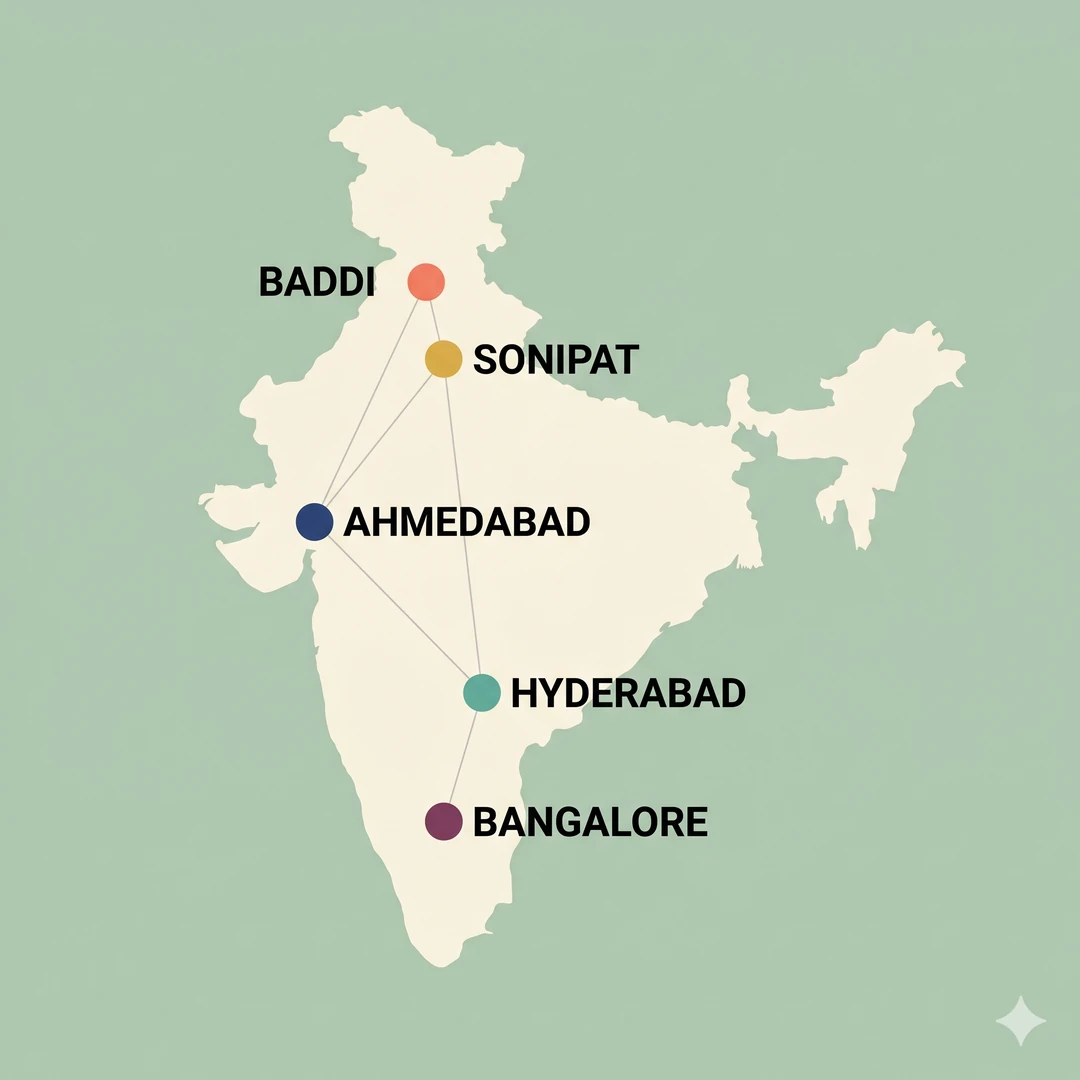
Most Tier 3 manufacturers cluster in the Baddi-Barotiwala-Nalagarh (BBN) belt of Himachal Pradesh, plus the adjacent Panchkula area in Haryana. The concentration is structural, not accidental. The BBN belt sits on roughly 20 years of pharma cluster history, with excise tax incentive heritage from the 2003 Industrial Policy, a dense API supply chain right next door, regulatory continuity, and labour costs that nobody in Mumbai or Bengaluru can match. Roughly 35 to 45 percent of all medicine formulations made in India come out of this single cluster per industry estimates.
The Bangalore biotech-pharma belt offers a different value proposition entirely. Specialty injectables, biosimilars, oncology-grade manufacturing. The Sonipat Kundli cluster is the Delhi NCR logistics play. Zirakpur-Mohali sits somewhere in between, mixing mid-tier manufacturers with the wider PCD trading scene. The Hyderabad-Patancheru cluster is API-heavy. The Ahmedabad-Sanand-Changodar corridor anchors on Zydus and the larger Gujarat originator base. Each cluster comes with its own trade-offs. A brand owner ought to understand the trade-off before sourcing.
What to check before signing with a Tier 3 manufacturer
A practical due-diligence checklist.

Verify the state Drug Controller manufacturing licence. Form 25 (allopathic) or Form 28 (restricted). Cross-check on the CDSCO approved manufacturing sites by state FDA portal.
Verify Revised Schedule M compliance. Binding from 1 January 2026 per the CDSCO November 2025 directive following the Coldrif cough syrup deaths. Reference: CDSCO Schedule M guidelines PDF.
Verify the WHO-GMP certificate where applicable. CDSCO WHO-GMP certified manufacturers list PDF.
Visit the plant. Drive to Baddi, Panchkula, Bangalore, Sonipat, Zirakpur, Hyderabad or wherever the plant happens to be. A one-day trip from the nearest metro. The plant tour is your basic test. Skip it at your own risk.
Get an NDA on your formula. If you’re supplying a proprietary formula, get a non-disclosure agreement signed before you share any details.
Ask for a 50 to 100 strip first-batch verification sample. Send 2 to 3 strips to an NABL-accredited third party testing laboratory for active content, dissolution and impurity profile testing.
File your trademark before placing the order. Get the Trade Marks Registry application acknowledgement in hand before any packaging plates are made.
Start small. 5 to 10 SKUs of fast-moving products. Learn the manufacturer’s responsiveness before you scale.
Lock pricing transparency. Per-unit breakdown covering API, excipients, packaging, manufacturing overhead, taxes, and margin.
Lead time commitment in writing. Standard 30 to 45 days for the first order. 25 to 35 days for repeat batches.
DPCO 2025 context
The NPPA DPCO 2025 16 percent combined retail-distributor margin cap on 743 scheduled formulations affects what PCD distributors and chemists can earn on cardiac, anti-diabetic, basic antibiotics, and chronic-care SKUs, regardless of which Indian manufacturer is making them. Brand owners using third party manufacturers for non-DPCO specialty molecules (SGLT2 inhibitors, DPP-4 newer formulations, ARNI heart failure combinations, cosmeto-pharma, premium nutraceuticals) preserve better margin headroom.
A note on this list
A few framing points so you know what you’re reading.
Plant-level production data and segment-level revenue breakdown aren’t publicly disclosed for many of the Tier 3 manufacturers. Ranking by capacity within Tier 3 is approximate, based on industry observation. Different sources will give you different ranking orders.
Revenue figures for Tier 1 and Tier 2 come from the latest reported annual reports (FY 2024-25). Some figures are estimated, either because the company is unlisted or because the segment-level disclosure is limited. Market cap references are January 2026 trading and will shift with stock price movement.
The Revised Schedule M binding 1 January 2026 has set off a wave of upgrade investment across small and mid-tier manufacturers. Some Tier 3 names on this list may consolidate, exit, or be acquired through 2026 as the compliance bar rises. Cross-reference current operational status before you place an order.
The October-November 2025 cough syrup contamination tragedy in Madhya Pradesh and Rajasthan, linked to Sresan Pharmaceuticals’ Coldrif syrup containing 48.6 percent diethylene glycol, has changed the regulatory environment for the whole industry. Schedule M compliance evidence and quality system documentation should be non-negotiable for any third party manufacturer engagement in 2026.
Founding years are from publicly available company information and may vary slightly across sources.
This list focuses on companies operating in the Indian domestic and export pharma space. Multinational arms (Pfizer India, GSK India, Sanofi India, AstraZeneca India, Roche India, Bayer India, Novartis India) operate differently. We’ve listed them separately because they rarely take third party orders from Indian brand owners.
Sources and references
Stock exchanges and listed company data
- Bombay Stock Exchange (BSE)
- National Stock Exchange (NSE)
- GlobalData India Healthcare Companies by Market Cap
- Screener.in company data
FY25 revenue and ranking coverage
- Laafon – Top 10 Pharma Companies in India 2026 by Market Cap
- The Financial World – FY25 Profitability of Leading Pharma Companies in India
- Curavax – Top 50 Pharma Companies in India 2026
- Business News Today – Top 10 Indian pharma companies 2026
- Angel One – Best Pharma Stocks January 2026
- Lakshmishree – Top Pharma Companies in India 2026
- Analytics Insight – Top Pharmaceutical Stocks for 2026
- IPO Central – Biggest Pharma Companies In India
- MedicinMan – Top 10 Indian Pharma 2025
Akums IPO listing data
- Chittorgarh – Akums Drugs and Pharmaceuticals IPO
- Business Standard – Akums Drugs IPO opens 30 July 2024
Company-specific corporate references (Tier 1 and Tier 2)
- Sun Pharmaceutical Industries
- Dr. Reddy’s Laboratories
- Cipla
- Zydus Lifesciences
- Aurobindo Pharma
- Lupin
- Mankind Pharma
- Torrent Pharmaceuticals
- Glenmark Pharmaceuticals
- Alkem Laboratories
- Intas Pharmaceuticals
- Biocon Limited
- Biocon Q1 FY26 revenue release
- Hetero Healthcare
- Macleods Pharmaceuticals
- Akums Drugs
- Gland Pharma
- Wockhardt
- IPCA Laboratories
- Abbott India
- Ajanta Pharma
- Stock Analysis – Ajanta Pharma Revenue
- Natco Pharma
- Eris Lifesciences
- Marksans Pharma
- Indian Pharma Post – Marksans Q1 FY25 revenue up 18 percent
- Strides Pharma Science
- USV Private Limited
Tier 3 manufacturer references
- JB Chemicals & Pharmaceuticals
- Shilpa Medicare
- Indoco Remedies
- Screener – Indoco Remedies
- Unichem Laboratories
- Lincoln Pharmaceuticals
- Innovexia Life Sciences
Multinational India operations
Central regulatory and pricing
- Central Drugs Standard Control Organisation (CDSCO)
- CDSCO approved manufacturing sites by state FDA portal
- CDSCO WHO-GMP certified manufacturers list PDF
- CDSCO Revised Schedule M guidelines PDF
- CDSCO Drugs and Cosmetics Rules
- BusinessToday – CDSCO comply by January 1 directive November 2025
- Medical Dialogues – Tamil Nadu cancels Sresan Pharma licence
- National Pharmaceutical Pricing Authority (NPPA)
- Pharmexcil
- Trade Marks Registry, Government of India
- NABL India – accredited testing laboratories
Industry data
- IBEF Pharmaceutical Industry in India
- Credence Research India Retail Pharmacy Market
- Ken Research India Pharmacy
- Himachal Pradesh state government
Some points on this guide
Plant-level production data and revenue breakdown aren’t publicly disclosed for many of the Tier 3 manufacturers. Ranking by capacity within Tier 3 is approximate, based on industry observation. Different sources will give you different ranking orders.

Revenue figures for Tier 1 and Tier 2 come from the latest reported annual reports (FY 2024-25). Some figures are estimated, either because the company is unlisted (Intas, Macleods, Hetero, USV) or because segment-level disclosure is limited.
Market capitalisation references are January 2026 trading data and will shift with daily stock price movement. The rankings within the top 10 by market cap and by revenue diverge meaningfully because of differential price-to-earnings ratios across the sector. Divi’s Laboratories, for example, ranks #2 in market cap but isn’t in the top 10 by revenue, because it’s a specialty API company with high margins per rupee of sales.
Founding years are from publicly available information and may vary slightly across sources. Company names listed reflect the current legal name as of early 2026.
The Revised Schedule M binding 1 January 2026 will likely drive some Tier 3 consolidation through 2026. Cross-reference current operational status and Schedule M compliance evidence before engaging any specific manufacturer.
Brand-owner due diligence on third party manufacturers in 2026 should be more rigorous than it was in 2024 or 2025, given the regulatory ground-shift after the October-November 2025 cough syrup deaths. A plant visit, Form 25/28 verification, Schedule M Gap Assessment evidence, NABL-lab batch testing, and reference checks with existing clients are baseline requirements now. Not optional steps.
This list focuses on companies operating in the Indian domestic and export pharma space. If you’ve personally worked with a Tier 3 manufacturer we’ve missed, or one that warrants additional detail, please get in touch. We update this article every 2 to 3 months based on current revenue disclosures and industry feedback.
You might also like
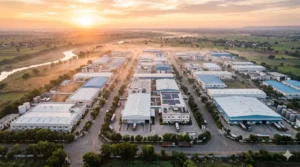
Top Pharmaceutical Manufacturers in Changodar GIDC 2026: The Ahmedabad Satellite Cluster
Changodar GIDC is a satellite of the Ahmedabad pharma corridor, not a peer of Baddi. A 2026 brand-owner…
Read article →
Top Pharmaceutical Manufacturers in Sonipat 2026: The Kundli Belt and North India’s Logistics Hub
A 2026 buyer's guide to the Sonipat pharma cluster — HSIIDC Kundli, Barhi and Rai — covering the…
Read article →
Top Pharmaceutical Manufacturers in Zirakpur 2026: The Manufacturer-Focused Guide
Only the real Zirakpur plants with their own Form 25 or Form 28 manufacturing licence. The manufacturer-focused guide,…
Read article →