
Why does the 3 AM wake-up cluster so reliably around 3 AM? There isn’t one clean answer, but the most popular explanations don’t survive a second look.
Take Rajesh. He’s 41, runs a small textile distribution business out of Surat, hasn’t had an unbroken night’s sleep in eighteen months. He falls asleep within minutes of his head hitting the pillow at 11:30 PM. And then, like a switch flipping, his eyes open at 3:07 AM. Heart slightly racing. Mind cold-starting on tomorrow’s GST filing. He scrolls the phone for “five minutes” and the next thing he knows the alarm is going off and he’s more tired than when he went to bed.
He tried what most people try. Cut tea after 6 PM. Bought a melatonin gummy. Listened to a “ASMR for sleep” YouTube channel that has 2 million views. Took alprazolam from a friend’s leftover strip. None of it stuck. The 3 AM wake-up kept coming back.
Now, what does the conventional view actually say? His family doctor called it “stress” and offered an SSRI. His mother-in-law diagnosed “vata imbalance” and told him to drink warm milk. A friend forwarded a WhatsApp message about “Liver Hour” in Chinese medicine, which apparently corresponds to 1-3 AM. Some of this is folk reasoning, some of it is genuine clinical instinct, but none of it explains why an otherwise calm, business-as-usual Tuesday night still produces a 3 AM wake-up. If it were pure stress, you’d expect the timing to fluctuate. It doesn’t. It comes back at the same hour, on stressful and quiet days alike.
That’s the first crack in the conventional view. The fix doesn’t sit in the head. It sits in what you ate four hours before going to bed. Once you see the mechanism, the actual fix mostly lives in your kitchen.
Why 3 AM Specifically — The Cortisol-Glucose Seesaw
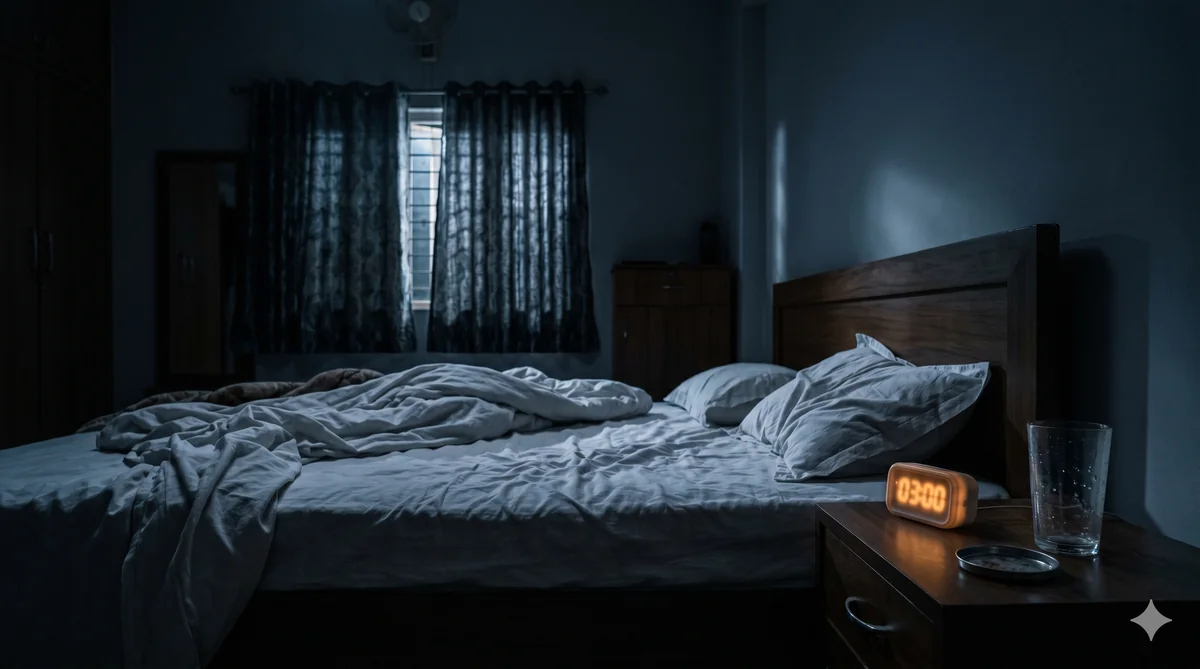
At first I thought the cortisol rise in the small hours was incidental, just a normal part of waking up. Then I read more carefully. Around 2 to 3 AM, your body starts releasing cortisol in small, rising pulses. This is the lead-up to the Cortisol Awakening Response, which peaks 30 to 45 minutes after you actually open your eyes in the morning. The gentle climb in the small hours has a specific job: to keep your brain fuelled while you finish your overnight fast.
Here is how the system works in a quiet, well-calibrated body. You stop eating at 7:30 PM. By midnight, your gut has finished digesting. Your liver takes over and drips glucose into the bloodstream from glycogen stores, keeping blood sugar steady around 80-90 mg/dL through the night. You sleep through all of it.
Here is where it goes wrong. If blood glucose drops too low at any point (what doctors call nocturnal hypoglycemia) your body treats the dip as a small emergency. The pancreas releases glucagon. The adrenal glands dump cortisol, epinephrine and norepinephrine. Growth hormone rises. The point of this counterregulatory cascade is to push glucose back up by triggering glycogenolysis and gluconeogenesis. By the time the system has corrected itself, your bloodstream is humming with fight-or-flight chemistry. You wake up. Alert. Heart thumping. Mind already running about the WhatsApp message your client sent you yesterday at 6 PM.
A 2024 cross-sectional study in PMC (article 12417556) showed cortisol acts as a reliable predictor of nocturnal hypoglycemia in insulin-treated diabetes. The same mechanism plays out, in a softer form, in non-diabetic adults who simply ate the wrong thing at the wrong time. A 2007 paper in Diabetes (Jauch-Chara et al.) showed that catecholamine, ACTH and cortisol surges are tightly linked to awakening during nocturnal hypoglycemia. And the response is actually blunted during deep sleep in the early hours, which is why the wake-up tends to cluster in the 3 to 4 AM window when sleep is lighter and counterregulation is more easily triggered.
So why are so many urban Indians stuck in this loop?
The Indian Dinner Problem
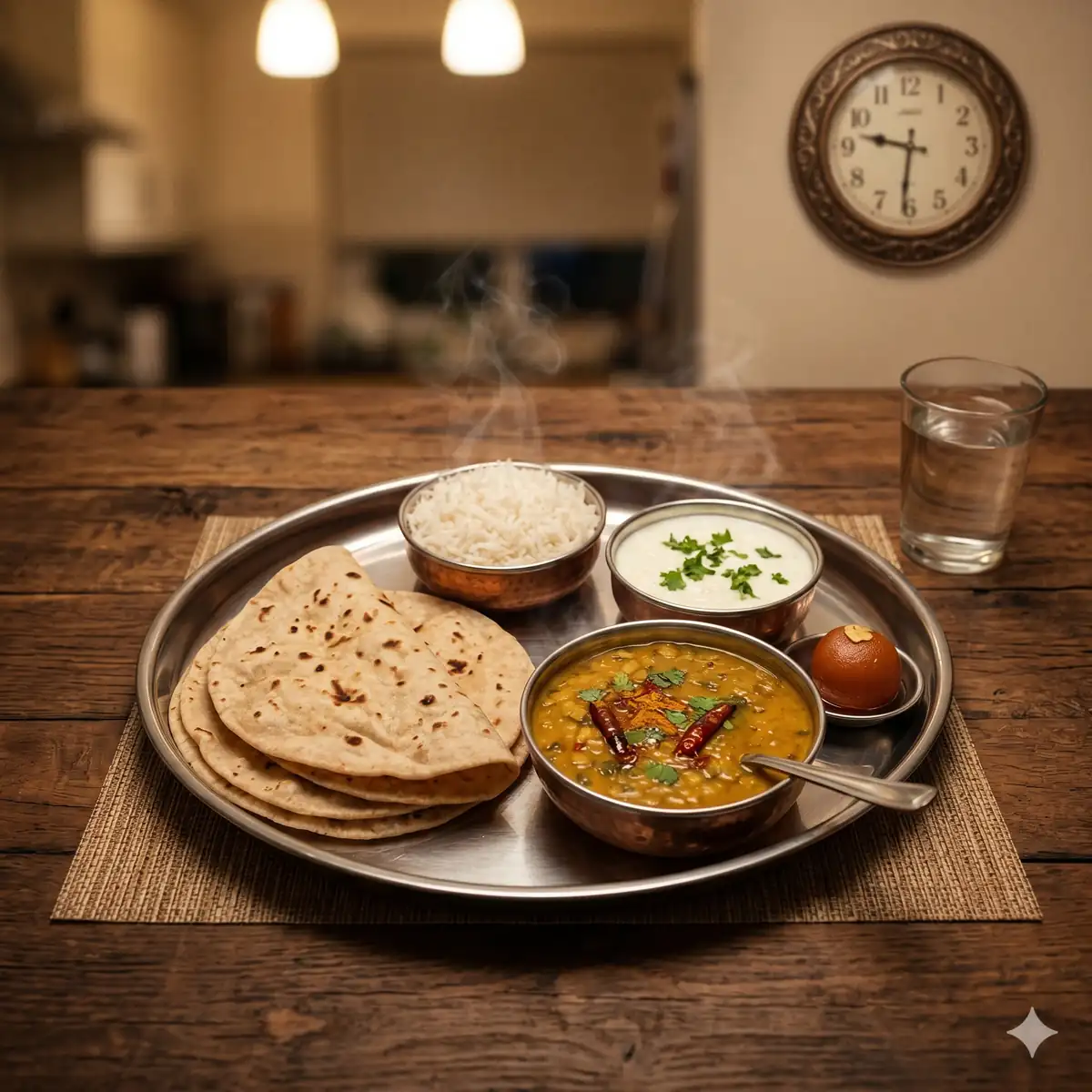
Two things make the average urban Indian dinner almost engineered to wake you up at 3 AM.
It’s late. A 2024 Indian household-eating survey reported by Business Standard and echoed by gastroenterologist Dr. Saurabh Sethi (AIIMS, Harvard, Stanford) found dinner in Indian cities typically falls between 8:30 and 9:30 PM, with many families pushing it to 10 PM on workdays. After sunset, the pancreas becomes less responsive to insulin because melatonin starts rising. The same hormone that makes you sleepy also blunts insulin secretion. A 2021 Nutrients review (PMC7823244) on meal timing and circadian health showed that an identical meal eaten at 9 PM produces a substantially bigger glucose spike than the same meal at 7 PM. The body is exquisitely sensitive to when food arrives, not just what it is.
It’s carb-heavy. Three rotis, a katori of rice, dal, a small portion of curd, and “thoda meetha ho jaaye” at the end. This is a fast-absorbing carbohydrate load with very little protein or fat to slow it down. The result: a sharp glucose peak around 10 PM, an aggressive insulin response to bring it down, and three to four hours later, at exactly the wrong time, a sugar dip steep enough to trip the cortisol alarm.
A 2024 trial in Frontiers in Nutrition (PMC11144034) on habitual late eaters with type 2 diabetes showed that simply moving dinner earlier improved the 24-hour glycemic profile in the short term, even without changing what they ate. The signal is consistent across populations.
There’s one more uniquely Indian twist that I almost left out. The traditional Indian dinner is often eaten while sitting cross-legged on the floor, then followed by lying flat on a bed within thirty minutes. Lying flat after a heavy carb meal slows gastric emptying further, prolonging the insulin response, deepening the subsequent dip. The grandparents who told you to take a stroll after dinner had clinical wisdom they couldn’t articulate.
The Other Usual Suspects — Do Not Skip These
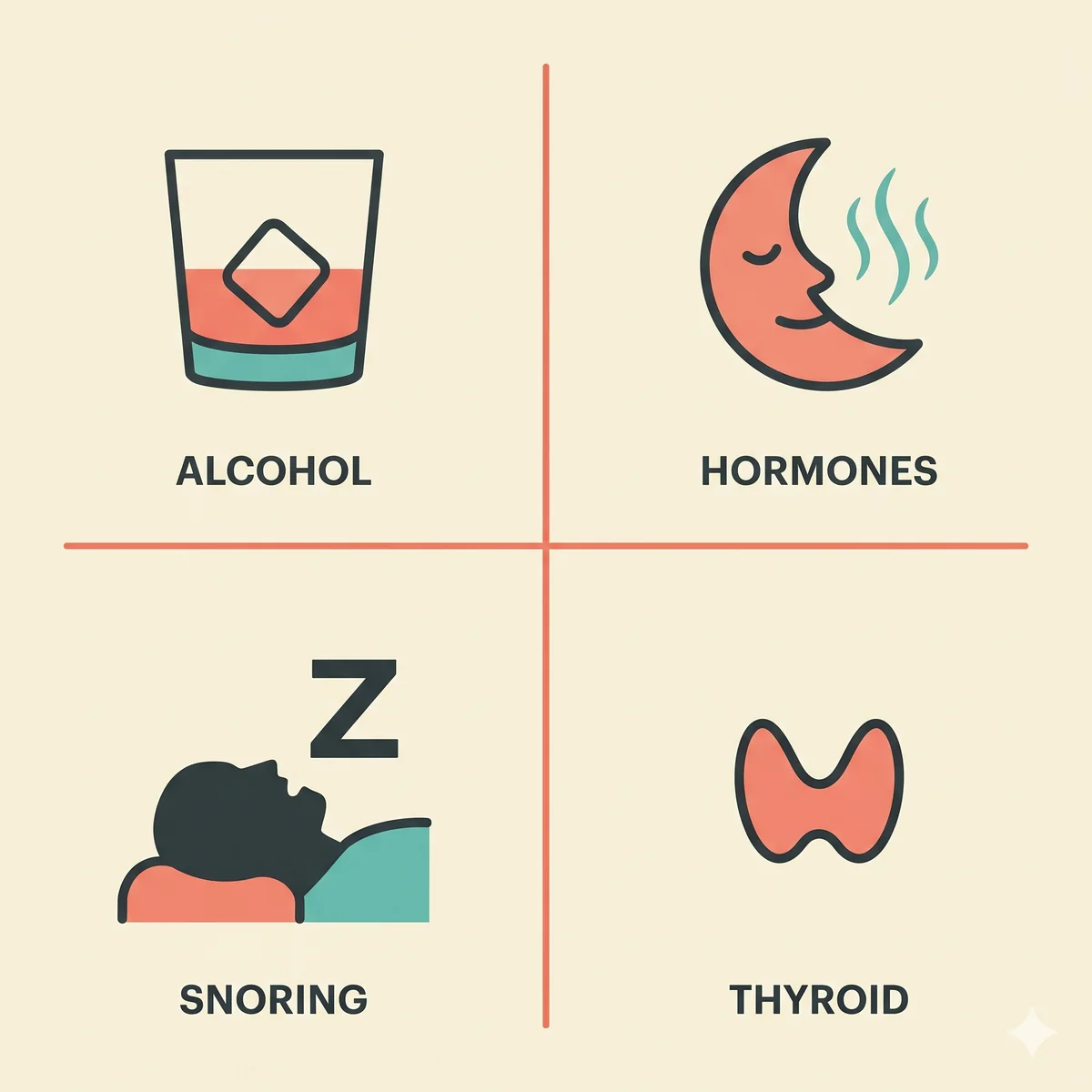
Late carb dinner is the most common driver. But it’s worth being honest about the others, because here’s where the dinner explanation starts to fray at the edges.
Alcohol at dinner. A peg of whisky at 9 PM is fully metabolised by 2 to 3 AM. As blood alcohol drops, GABA-driven inhibition lifts, glutamate surges, and noradrenaline spikes. A chemical storm that fragments sleep architecture. A 2015 paper in Alcohol (PMC4427543) documented that alcohol disrupts sleep homeostasis particularly in the second half of the night. The diuretic effect compounds the problem; you wake up needing the bathroom and then cannot get back to sleep.
The Cortisol Awakening Response amplified by chronic anxiety. People with generalised anxiety show exaggerated cortisol patterns in the early morning. The baseline rise everyone has becomes a full alarm. If you wake at 3 AM and your brain immediately replays a year-old conversation with your manager, this is what’s happening. The fix here isn’t a sleeping pill. It’s the anxiety itself.
Perimenopause. Women between 40 and 55 often start waking at 3 AM well before menopause is “official.” Indian women hit menopause at a median age of 46.6 years, several years earlier than Western populations. Falling progesterone reduces GABA-driven calm; dipping estrogen causes night sweats and impairs thermoregulation. A 2024 narrative review in PMC (article 11901009) on perimenopause and sleep documented that roughly 40 percent of perimenopausal women have clinically significant sleep maintenance insomnia. If you’re in this age bracket and wake-ups have started recently, this is worth flagging to your gynaecologist.
Obstructive sleep apnoea. If you snore, are heavier around the neck, or your partner reports gasping or pauses in breathing, the 3 AM wake-up may be coming from the airway, not the metabolism. OSA prevalence in Indian adults is estimated at 9 to 13 percent (and as high as 37 percent in some patient-population subgroups, per a 2024 Journal of Family Medicine and Primary Care review). A 2024 meta-analysis of Indian sleep studies found pooled insomnia prevalence at 25.7 percent and OSA at 37.4 percent in studied populations. This one needs a sleep study, not a dietary tweak.
Hyperthyroidism. A subset of “anxious 3 AM wake-up” cases is undiagnosed Graves’ disease. If you also have weight loss, tremor, palpitations, heat intolerance or unexplained tachycardia, ask for a TSH-T3-T4-anti-TPO panel.
So if I had to bet, for most readers (slim or otherwise, vegetarian or non-vegetarian) the dinner is the loose floorboard you keep tripping over. But the loose floorboard isn’t always the right answer, and the workup below exists for the cases where it isn’t.
Diagnostic Workup — Order of Tests
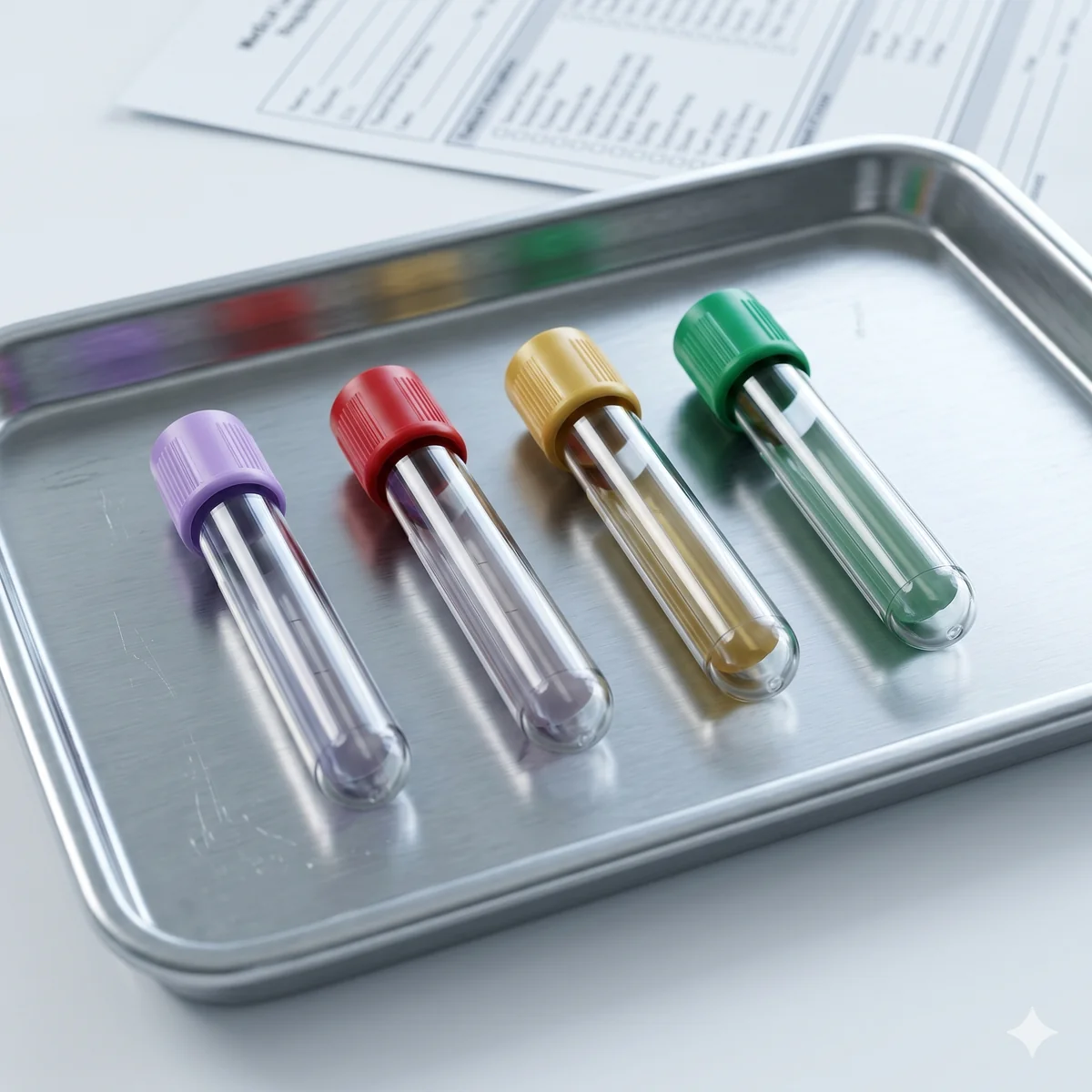
If kitchen fixes alone don’t work after six to eight weeks, this is the order an Indian physician should work through.
First pass — bloods. Fasting glucose, HbA1c, fasting insulin, thyroid panel (TSH, T3, T4), ferritin, vitamin D, vitamin B12. Iron deficiency in particular is a quietly common driver of restless legs and fragmented sleep in Indian women, with NFHS-5 reporting 57 percent anaemia in women of reproductive age.
Second pass — sleep diary plus screening. Keep a two-week sleep diary recording bed time, sleep onset, wake time, all night-time awakenings and any dinner content/time. STOP-Bang questionnaire for OSA risk (Snoring, Tiredness, Observed apnoea, blood Pressure, BMI, Age, Neck circumference, Gender). Score of 3 or more means a sleep study is indicated.
Third pass — sleep study. Home sleep test costs ₹2500 to ₹6000 in major Indian cities and is now widely available. Full in-lab polysomnography is the gold standard if home study is inconclusive. CPAP therapy for confirmed moderate-severe OSA is genuinely life-changing.
Fourth pass — psychiatry referral. If insomnia persists with daytime mood symptoms (early morning waking is the classic “endogenous depression” pattern described in psychiatric textbooks for over a century) a mental health workup is appropriate. Don’t wait six months for this if mood symptoms are present.
Treatment Ladder — Order Matters
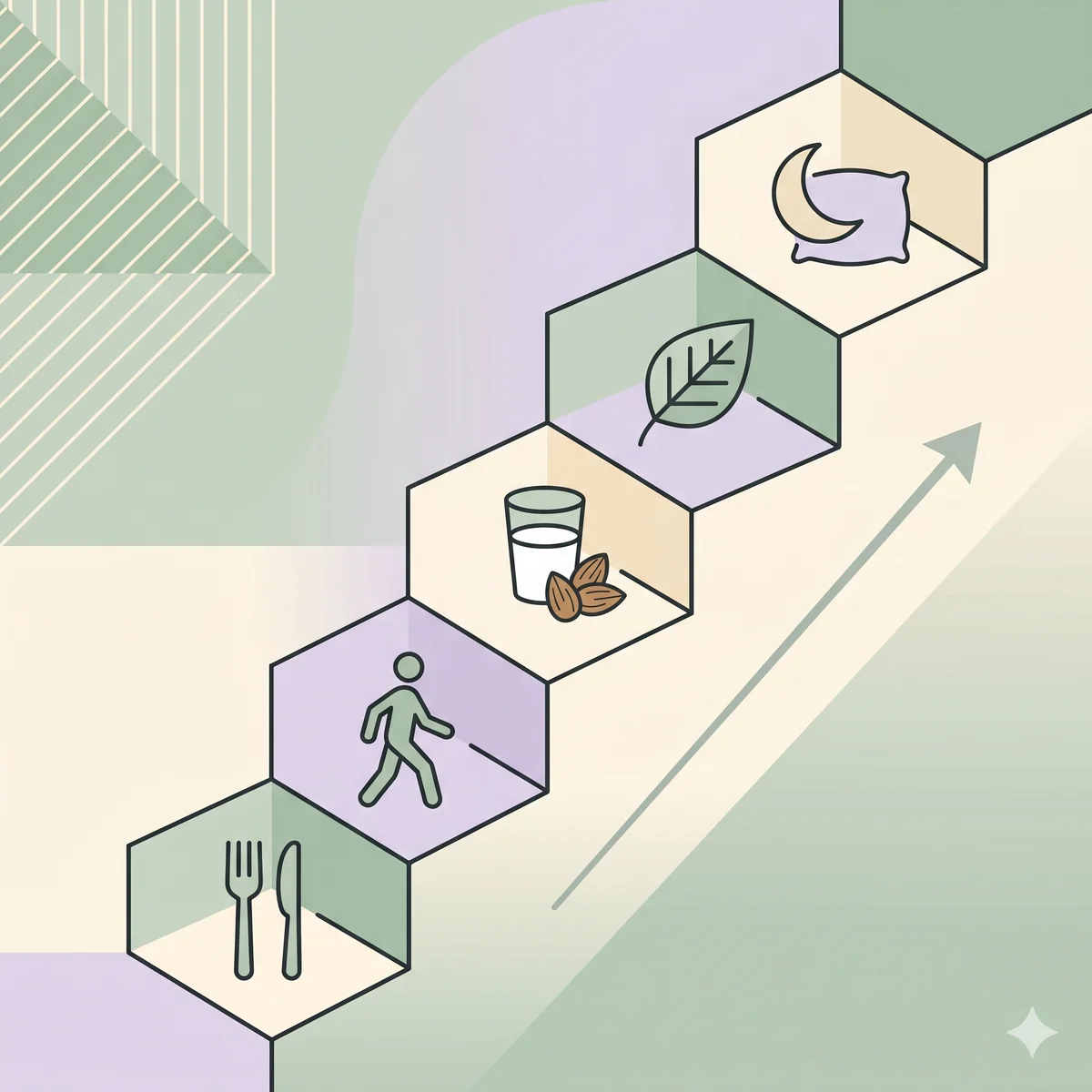
Step 1 — Dinner timing and composition (free). Finish dinner by 7:30 PM if at all possible. The “Indian family dinner is sacred” argument is real, but family dinner at 7:30 with a glass of saunf-ajwain water after, instead of a heavy meal at 9:30, works just as well. If 7:30 is impossible, push for 8:30 and make the dinner lighter. Cut white rice and wheat rotis at night to roughly half their usual quantity. Add a real protein anchor: paneer bhurji, a two-egg omelette, grilled fish, sprouted moong, or moong dal khichdi mixed with sautéed vegetables. Throw in something fibrous and slow. A salad with cucumber-tomato-onion, sautéed lauki, or steamed methi. A meal built like this releases glucose gently for hours instead of one sharp peak.
Step 2 — Movement after meals (free). Walk for fifteen minutes after dinner. This single change blunts the post-meal glucose curve by 17 to 30 percent in published studies. The grandparents knew. Don’t lie down within three hours of finishing dinner.
Step 3 — A small protein-fat bedtime snack if needed. For people whose hypoglycemia is real, eating closer to bed sometimes helps even though it seems counterintuitive. Half a glass of unsweetened milk with five soaked almonds, or a tablespoon of peanut butter on a digestive biscuit at around 10:30 PM. The aim is to provide a slow-release substrate for the liver to draw on overnight, so it doesn’t have to mount a counterregulatory response at 3 AM. This only helps a specific subgroup; try it for two weeks and stop if it makes things worse.
Step 4 — Supplements with real evidence. Magnesium glycinate 200 to 400 mg one hour before bed has a small-to-moderate evidence base for improving sleep continuity, particularly in older adults and stressed populations. Ashwagandha (Withania somnifera) at 300 to 600 mg standardised root extract in the evening; a 2019 Cureus study on KSM-66 ashwagandha showed measurable improvements in sleep quality and reductions in cortisol over eight weeks. Melatonin 0.3 to 1 mg (note: not the 5-10 mg over-the-counter pills, which are too high and counterproductive) taken thirty minutes before bed for sleep-onset issues. Less useful for the 3 AM wake-up specifically.
Step 5 — CBT-I, the actual first-line evidence-based treatment. The American College of Physicians has recommended cognitive behavioural therapy for insomnia (CBT-I) as the first-line treatment for chronic insomnia since 2016. A 2024 evidence synthesis combining 28 papers (five guidelines, three expert consensus papers, 12 systematic reviews, eight meta-analyses) confirmed CBT-I as the most effective single intervention with minimal adverse effects. The core components are sleep restriction therapy, stimulus control, cognitive restructuring around catastrophic sleep thoughts, and relaxation training. India is short on trained CBT-I therapists, but digital CBT-I apps (Sleepio, CBT-i Coach, Somnio) have published efficacy data in randomised trials.
Step 6 — Prescription, used carefully. Indian primary care defaults to benzodiazepines (alprazolam, clonazepam) and Z-drugs (zolpidem). Both create rapid tolerance and dependence within 2 to 4 weeks. If sleep medication is necessary, low-dose doxepin (3-6 mg) and mirtazapine 7.5-15 mg have better evidence for sleep maintenance specifically. Discuss with a physician before any of these.
When To Stop Self-Managing And See A Doctor

Eight weeks of disciplined dinner timing, walking after meals and basic sleep hygiene should produce noticeable improvement. If it hasn’t, or if any of the following are present, escalate now.
Loud snoring or witnessed gasping at night. Drenching night sweats, especially in women over 40. Three AM wake-ups paired with low mood, loss of interest or suicidal thoughts for six weeks or more. Known diabetes with overnight readings under 70 mg/dL or with the “Somogyi” pattern of morning hyperglycaemia after a night-time low. Chest discomfort, palpitations or breathlessness that wakes you. Unexplained weight loss, tremor or heat intolerance suggesting hyperthyroidism. New onset of severe insomnia in someone over 60 (rule out organic causes including early dementia and Parkinson’s).
A short-term, properly prescribed sleep medication isn’t a failure of willpower. Untreated chronic insomnia raises cardiovascular event risk, worsens diabetes control, and accelerates cognitive decline. Get the appointment.
What Indians On Forums Actually Found Works
On Indian sleep threads, Quora India and r/india insomnia discussions, the pattern of what actually worked is consistent. People who solved their 3 AM wake-ups almost never mention prescription pills as the answer.
“Stopped eating after 8. Swapped the late rice for a vegetable bhujia with paneer. Gave up the after-dinner sweet. Started walking 15 minutes after dinner. Fixed in three weeks.”
“I thought I had anxiety insomnia for two years. Turns out I just needed to stop having pulao at 10 PM.”
“My OSA was missed for six years because I am thin and nobody thought of it. CPAP machine changed my life.”
“Ashwagandha + magnesium + no phone after 10 PM + dinner by 7:30. The whole stack. Less interesting than the single magic pill people want, but it worked.”
The texture is the same every time. The dal-chawal at 9:30 was the problem. What would change my mind on the dinner-first hypothesis is consistent failure of the kitchen fix in non-snorers, non-perimenopausal, non-anxious adults; in that group, the metabolic explanation is the one that holds up.
Also Read
Blood Sugar Balance at Social Events — A Discreet Diabetic’s Guide for the dinner-out version of the same problem.
How to Reduce Triglycerides Without Medicine in One Month for the broader metabolic context.
For magnesium glycinate, standardised ashwagandha, low-dose melatonin and clinical-grade sleep-support formulations, see the full IndiaPharmaFranchise product portfolio. Pharma entrepreneurs interested in adding sleep-support products to a regional portfolio can explore the franchise opportunity.
Disclaimer: This article is general health information for adult Indian readers. Persistent insomnia, sleep-disordered breathing, or sleep problems alongside mood changes need evaluation by a qualified physician. Don’t self-diagnose or stop prescribed sleep medication based on a blog post.
Sources
- Jauch-Chara K et al. Awakening and Counterregulatory Response to Hypoglycemia During Early and Late Sleep. Diabetes 2007. https://diabetesjournals.org/diabetes/article/56/7/1938/
- Schultes B et al. Awakening from Sleep and Hypoglycemia in Type 1 Diabetes Mellitus. PLOS Medicine 2007. https://pmc.ncbi.nlm.nih.gov/articles/PMC1808112/
- Cortisol as a Predictor of Nocturnal Hypoglycemia in Insulin-Treated Diabetes: A Cross-Sectional Study. PMC 2024. https://pmc.ncbi.nlm.nih.gov/articles/PMC12417556/
- Henst RHP et al. Timing Is Everything, Right? Meal Impact on Circadian Related Health. Nutrients 2021. https://www.ncbi.nlm.nih.gov/pmc/articles/PMC7823244/
- Early Dinner Improves the Glycemic Profile in Habitual Late Eaters With Uncontrolled Type 2 Diabetes Mellitus in the Short Term. Frontiers in Nutrition 2024. https://www.ncbi.nlm.nih.gov/pmc/articles/PMC11144034/
- Thakkar MM et al. Alcohol Disrupts Sleep Homeostasis. Alcohol 2015. https://www.ncbi.nlm.nih.gov/pmc/articles/PMC4427543/
- Singh V et al. Systematic Review of Prevalence of Sleep Problems in India: A Wake-up Call. medRxiv 2023. https://www.medrxiv.org/content/10.1101/2023.12.29.23300624v1
- Prevalence and predictors of insomnia and its treatment-seeking among older adults in India (LASI Wave 1, ICMR-supported). Journal of Activity, Sedentary and Sleep Behaviors 2024. https://pmc.ncbi.nlm.nih.gov/articles/PMC11960366/
- Prevalence of sleep disorders and association with various factors. Journal of Family Medicine and Primary Care 2024. https://journals.lww.com/jfmpc/fulltext/2024/13100/prevalence_of_sleep_disorders_and_association_with.14.aspx
- Sleep Disturbance and Perimenopause: A Narrative Review. PMC 2024. https://www.ncbi.nlm.nih.gov/pmc/articles/PMC11901009/
- Summary of the best evidence that cognitive behavioral therapy for insomnia improves sleep quality in patients with chronic insomnia. PMC 2024. https://www.ncbi.nlm.nih.gov/pmc/articles/PMC12897499/
- Langade D et al. Efficacy and Safety of Ashwagandha (Withania somnifera) Root Extract in Insomnia and Anxiety. Cureus 2019.
You might also like

Monobenzone Reviews — What Real Patients Say About Treatment
Monobenzone Reviews — What Real Patients Say About Treatment A note on this article. This is a synthesis…
Read article →
Depigmentation vs Repigmentation for Vitiligo — Which Approach Fits You?
Depigmentation vs Repigmentation for Vitiligo — Which Approach Fits You? The two strategies pull in opposite directions: bring…
Read article →
Talking to Your Dermatologist About Depigmentation — Questions to Ask
Talking to Your Dermatologist About Depigmentation — Questions to Ask Depigmentation therapy is a serious, permanent treatment. The…
Read article →